Electricity demand is entering a new phase. Artificial intelligence, cloud services and large data centres are adding concentrated loads that must operate around the clock. At the same time, electrification in industry, transport and buildings is increasing pressure on local distribution networks.
Power demand is accelerating
The International Energy Agency expects global electricity demand to grow by about 3.6% in 2026 and 3.8% in 2027. In the United States, data centres are expected to account for around half of electricity-demand growth through 2030. These changes are bringing transformer capacity, switchgear reliability and network flexibility back to the centre of project planning.
What changes for power-distribution equipment?
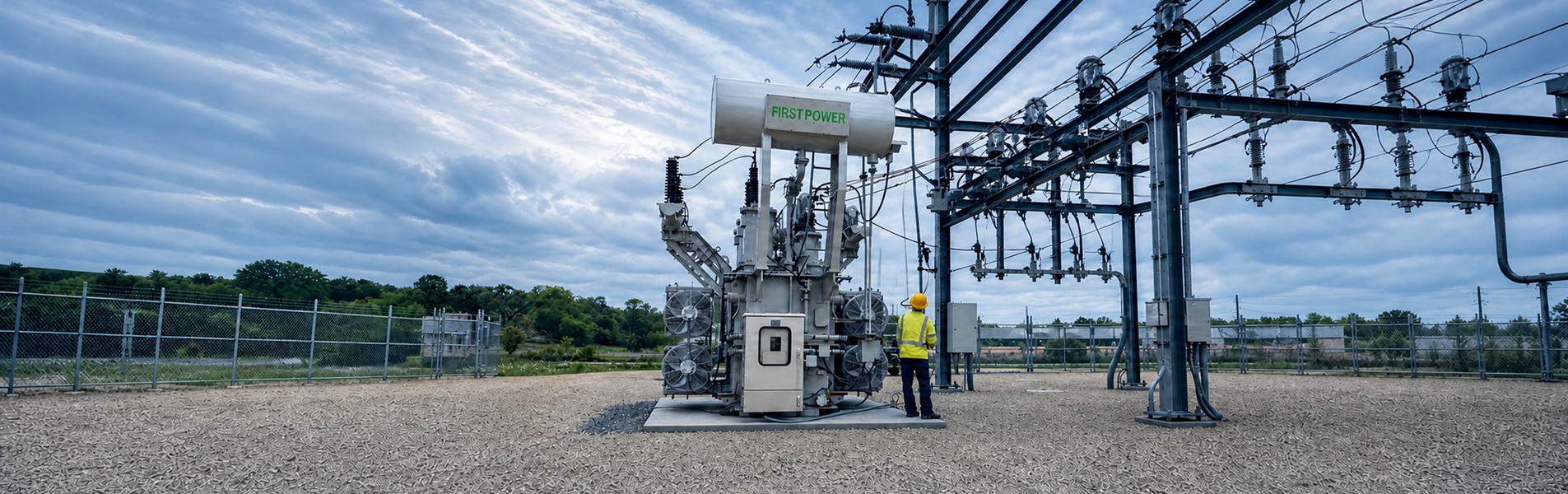
High-density digital facilities need stable voltage, dependable protection and equipment that can tolerate sustained loading. Transformer selection must therefore consider more than the nameplate rating. Load profile, ambient temperature, expected expansion and acceptable losses all affect the final specification.
Transformer capacity: allow practical thermal margin for continuous loads and future expansion.
Protection coordination: match medium-voltage switchgear, circuit breakers and relays to the system study.
Service continuity: use maintainable layouts and clearly defined isolation arrangements to reduce operational risk.
Planning for flexibility
Not every project requires the same transformer technology. Oil-immersed units remain a practical choice for many utility and outdoor applications, while dry-type transformers are often considered for indoor installations where fire performance, ventilation and maintenance access are important. Medium-voltage metal-clad or load-interrupter switchgear can then be selected according to voltage level, fault duty and operating requirements.
Early coordination between the load study, transformer specification and protection design helps avoid oversized equipment, insufficient capacity and late-stage changes. It also creates a clearer path for future renewable generation, battery storage or additional computing loads.
Data released by the Ministry of Industry and Information Technology showed that the output of all links of the photovoltaic industry chain reached a record high in 2022. The output of polysilicon, silicon wafers, cells and modules in China reache...
Die Lieferzeiten für Transformatoren und die Lieferketten im Netzbereich spielen auch im Jahr 2026 weiterhin eine wichtige Rolle. Informieren Sie sich über die elektrischen Nennwerte, die Installationsbedingungen, den Wirkungsgrad, die Zertifizierung und die Dokumentation, die Käufer vor der Bestellung überprüfen sollten.
With the rapid development of photovoltaic technology, perovskite solar cells (PSCs) with high efficiency and low cost have attracted much attention, which have the potential to replace traditional crystalline silicon cells. In particular, flexibl...
Photovoltaic inverter as an important part of photovoltaic power generation, the main role is to convert the direct current emitted by photovoltaic modules into alternating current. The inverter not only has the function of direct AC conversion, b...
 Ausgewählte Kategorien











Produktanfrage senden
Wir werden uns innerhalb von 24 Stunden bei Ihnen melden.