Electricity demand is entering a new phase. Artificial intelligence, cloud services and large data centres are adding concentrated loads that must operate around the clock. At the same time, electrification in industry, transport and buildings is increasing pressure on local distribution networks.
Power demand is accelerating
The International Energy Agency expects global electricity demand to grow by about 3.6% in 2026 and 3.8% in 2027. In the United States, data centres are expected to account for around half of electricity-demand growth through 2030. These changes are bringing transformer capacity, switchgear reliability and network flexibility back to the centre of project planning.
What changes for power-distribution equipment?
High-density digital facilities need stable voltage, dependable protection and equipment that can tolerate sustained loading. Transformer selection must therefore consider more than the nameplate rating. Load profile, ambient temperature, expected expansion and acceptable losses all affect the final specification.
Transformer capacity: allow practical thermal margin for continuous loads and future expansion.
Protection coordination: match medium-voltage switchgear, circuit breakers and relays to the system study.
Service continuity: use maintainable layouts and clearly defined isolation arrangements to reduce operational risk.
Planning for flexibility
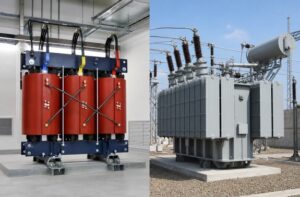
Not every project requires the same transformer technology. Oil-immersed units remain a practical choice for many utility and outdoor applications, while dry-type transformers are often considered for indoor installations where fire performance, ventilation and maintenance access are important. Medium-voltage metal-clad or load-interrupter switchgear can then be selected according to voltage level, fault duty and operating requirements.
Early coordination between the load study, transformer specification and protection design helps avoid oversized equipment, insufficient capacity and late-stage changes. It also creates a clearer path for future renewable generation, battery storage or additional computing loads.
Dữ liệu do Bộ Công nghiệp và Công nghệ Thông tin công bố cho thấy sản lượng của tất cả các khâu trong chuỗi ngành công nghiệp quang điện đã đạt mức cao kỷ lục vào năm 2022. Sản lượng polysilicon, tấm wafer silicon, tế bào quang điện và mô-đun tại Trung Quốc đã đạt...
Trước khi lựa chọn thiết bị cho dự án của bạn, hãy so sánh các loại máy biến áp khô và máy biến áp ngâm dầu dựa trên các tiêu chí như hệ thống làm mát, lắp đặt, bảo trì, an toàn phòng cháy chữa cháy, hiệu suất và ứng dụng.
Nhu cầu điện toàn cầu đang tăng nhanh trong giai đoạn 2026–2027. Hãy tìm hiểu lý do tại sao hiệu suất máy biến áp, công suất lưới điện, việc xác định thông số kỹ thuật sớm và quy hoạch phối hợp hệ thống thiết bị đóng cắt lại quan trọng đối với các dự án điện mới.
Biến tần quang điện là một bộ phận quan trọng trong hệ thống phát điện quang điện, có chức năng chính là chuyển đổi dòng điện một chiều do các mô-đun quang điện tạo ra thành dòng điện xoay chiều. Biến tần không chỉ có chức năng chuyển đổi trực tiếp sang dòng điện xoay chiều, mà còn...
 Các danh mục nổi bật











Gửi yêu cầu tư vấn về sản phẩm
Chúng tôi sẽ liên hệ với quý khách trong vòng 24 giờ