A transformer and its switchgear cannot be specified independently. Transformer impedance influences available fault current, voltage drop and motor-starting performance, while switchgear interrupting ratings and protective-device settings determine how faults are cleared.
When equipment is ordered before the system study is mature, teams may discover that fault duty exceeds a breaker rating, protection cannot coordinate or the selected impedance creates an unacceptable voltage dip. Early data exchange prevents expensive redesign.
Build a Reliable Short-Circuit Model
The study should use the utility source contribution, generator and motor contribution, cable impedances, transformer positive- and zero-sequence data, grounding arrangement and credible operating configurations. Maximum and minimum fault levels are both important.
Maximum current checks equipment duty. Minimum current determines whether protective devices will detect and clear faults within the required time, especially at the end of long feeders or under alternate source conditions.
Data to Exchange Before Purchase
Transformer rated power, voltage ratio, impedance tolerance, vector group and neutral grounding.
Switchgear voltage class, continuous current, short-time withstand and interrupting ratings.
CT ratios and accuracy, relay functions, breaker operating time and fuse characteristics.
Motor sizes, starting methods, generator contribution and inverter fault-current assumptions.
Normal, maintenance, tie-breaker and emergency operating configurations.
Required selectivity, arc-flash reduction features and utility interconnection constraints.
Carry the Study into Commissioning
Approved relay settings and trip logic should match the final as-built equipment data. Changes in transformer impedance, cable length, CT ratio or breaker type must be fed back into the model before energization.
Commissioning tests should verify CT polarity, trip circuits, interlocks, breaker timing and communication-assisted protection where used. The final study, setting files and test results then become the baseline for future system changes.
Next Step
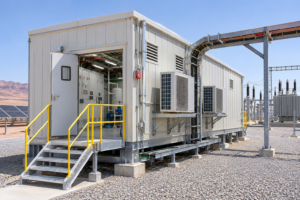
SOVIN can coordinate transformer and switchgear interfaces for integrated power-distribution projects. Review the prefabricated compact box substation and provide the current single-line diagram and available fault data.
Technical reference: IEC 60909 for short-circuit current calculations and the applicable IEC or IEEE switchgear standards.
Microgrids are gaining attention as utilities, communities and industrial sites look for ways to maintain critical services during wider grid disturbances. A June 2026 U.S. Department of Energy article highlights how microgrids can reduce expected...
With the rapid development of photovoltaic technology, perovskite solar cells (PSCs) with high efficiency and low cost have attracted much attention, which have the potential to replace traditional crystalline silicon cells. In particular, flexibl...
Pad-mounted transformers are widely used where commercial and industrial campuses distribute medium-voltage power through underground cables. Their enclosed construction supports ground-level operation, but the surrounding civil layout determines ...
Remote mines, renewable plants, oil and gas facilities and infrastructure projects often face limited skilled labor, difficult weather and compressed construction schedules. A prefabricated E-House moves much of the equipment installation, wiring ...
 Featured Categories














提交产品咨询
我们将会在24小时内联系您