Dry-type and oil-immersed transformers can both provide reliable voltage conversion, but they use different insulation and cooling systems. A practical selection should consider installation location, fire and environmental requirements, load profile, maintenance resources, enclosure design and applicable standards.
Dry-Type vs Oil-Immersed Transformer: Key Differences
| Selection point |
Dry-type transformer |
Oil-immersed transformer |
| Insulation and cooling |
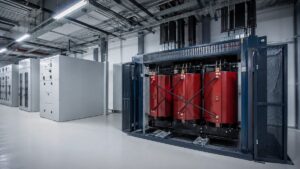
Air-cooled windings, often cast-resin or non-encapsulated construction |
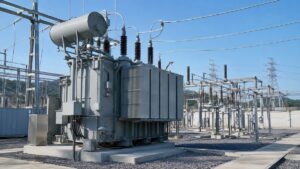
Core and windings immersed in insulating liquid |
| Typical location |
Buildings, electrical rooms, commercial facilities, industry and marine applications with a suitable enclosure |
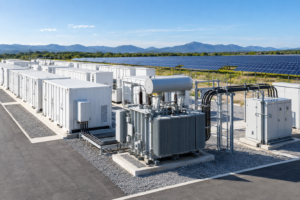
Outdoor substations, utility distribution, industrial plants and pad-mounted systems |
| Fire and environmental planning |
No insulating-oil containment system; enclosure, ventilation and fire classification still matter |
Fluid type, containment, fire separation and local environmental rules must be considered |
| Maintenance focus |
Cleaning, ventilation, connections, insulation condition and temperature |
Oil condition, sealing, gauges, bushings, cooling surfaces and connections |
| Specification focus |
Temperature rise, insulation class, enclosure, climatic/environmental/fire class |
Fluid, tank construction, cooling method, accessories and protection |
Choose a Dry-Type Transformer When
A dry-type transformer is often preferred when equipment will be installed inside or close to occupied facilities and the project wants to avoid liquid-insulation containment. Cast-resin windings provide mechanical and environmental protection, while open-wound designs can suit controlled indoor conditions. Ventilation, ambient temperature, altitude and enclosure rating must still be checked.
Available configurations include the SCBH15/17/19 amorphous-alloy dry-type transformer, the SGB12 H-class non-encapsulated transformer and the SCB three-dimensional core transformer.
Choose an Oil-Immersed Transformer When
Oil-immersed transformers are widely used in utility and industrial distribution because the insulating liquid supports heat transfer and compact high-capacity designs. They are common in outdoor substations, overhead networks and pad-mounted systems. The project should define the insulating fluid, tank protection, site containment and inspection plan.
For conventional distribution duties, review the three-phase oil-immersed distribution transformer or the ZGS Series II pad-mounted transformer.
Compare Efficiency at the Actual Load
Transformer type alone does not determine efficiency. Buyers should compare guaranteed no-load loss, load loss, impedance and temperature rise at the specified rating and expected load profile. IEC TS 60076-20 provides methods for evaluating transformer energy performance, while U.S. projects may also need to meet current Department of Energy requirements.
Information to Send Your Supplier
- Rated capacity, phase, frequency and voltage ratio.
- Vector group, impedance and tap range.
- Indoor or outdoor location, enclosure/IP rating and cooling method.
- Ambient temperature, altitude, humidity, pollution and seismic conditions.
- Expected load profile, efficiency target and loss limits.
- Required IEC, IEEE/ANSI, DOE, CE or UL compliance.
- Accessories, monitoring, protection and cable interface requirements.
Frequently Asked Questions
Are dry-type transformers only for indoor use?
No. A dry-type transformer can be used outdoors when its enclosure and environmental class are suitable for the site. The complete assembly must be specified for the actual conditions.
Do oil-immersed transformers require more maintenance?
They require fluid and sealing checks that dry-type units do not. However, maintenance frequency depends on rating, loading, environment, accessories and the owner’s condition-monitoring program.
Which transformer is more efficient?
Either design can be efficient. Compare certified or guaranteed losses at the required capacity and load profile instead of selecting by cooling method alone.
Need a project-specific recommendation? Share your electrical ratings and installation conditions, and our team can compare suitable dry-type and oil-immersed options.
Technical references: IEC 60076-11:2018; IEC TS 60076-20:2017; U.S. Department of Energy Distribution Transformers.
 Featured Categories










提交产品咨询
我们将会在24小时内联系您