 Featured Categories










Photovoltaic Inverter
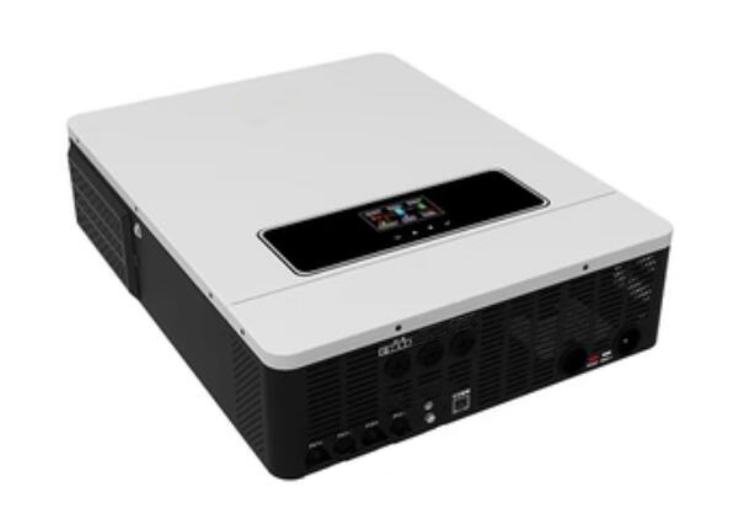
Photovoltaic inverter as an important part of photovoltaic power generation, the main role is to convert the direct current emitted by photovoltaic modules into alternating current. The inverter not only has the function of direct AC conversion, but also has the function of maximizing the performance of the solar cell and the function of system fault protection.
The output of the solar cell module varies with the intensity of solar radiation and the temperature of the solar cell module itself (chip temperature). In addition, the solar cell module has the characteristic of voltage decreasing with the increase of current, so there is an optimal operating point to obtain the maximum power. The intensity of solar radiation varies, and obviously so does the optimal working point. Relative to these changes, the operating point of the solar cell module is always at the maximum power point, and the system always obtains the maximum power output from the solar cell module. This control is the maximum power tracking control. The most important feature of the inverter used in solar power system is to include this function.
After sunrise in the morning, the intensity of solar radiation gradually increases, and the output of solar cells increases accordingly. When the output power required by the inverter is reached, the inverter automatically starts to run. After entering operation, the inverter will monitor the output of the solar cell module from time to time. As long as the output power of the solar cell module is greater than the output power required by the inverter, the inverter will continue to run; Until sunset shutdown, even in rainy weather the inverter can run. When the output of the solar cell module becomes smaller and the output of the inverter is close to 0, the inverter will be in standby state.
In solar power generation system, the efficiency of inverter is an important factor to determine the capacity of solar cell and storage battery.
Related recommendations
-

Battery Storage Growth Raises New Requirements for Step-Up Transformers
554Utility-scale battery storage is expanding rapidly. The U.S. Energy Information Administration reported in August 2026 that operational battery storage capacity reached nearly 52 GW in the first half of the year after averaging 70% annual growth o...
View details -
Microgrid Resilience Is Changing Transformer and Switchgear Design Priorities
467Microgrids are gaining attention as utilities, communities and industrial sites look for ways to maintain critical services during wider grid disturbances. A June 2026 U.S. Department of Energy article highlights how microgrids can reduce expected...
View details -
DOE Review Puts Distribution Transformer Efficiency and Supply Capacity in Focus
429Distribution-transformer efficiency, manufacturing capacity and material availability are again under review in the United States. In June 2026, the U.S. Department of Energy issued a request for information on how energy-conservation standards fo...
View details -
AI and Data Centre Growth Is Reshaping Transformer and Switchgear Demand in 2026
1104AI and data centre growth is increasing electricity demand in 2026. See how transformer capacity, medium-voltage switchgear, protection coordination and flexible distribution planning support reliable power systems.
View details

提交产品咨询
我们将会在24小时内联系您