 Featured Categories
Transformer Lead Times and Grid Supply Chains: What Buyers Should Watch in 2026
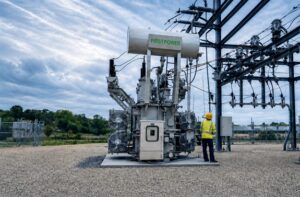
Distribution transformers are essential to new substations, renewable-energy projects, industrial facilities and network replacement programmes. As utilities and developers expand their systems, delivery schedules and component availability have become important parts of technical planning—not simply purchasing details.
Why lead times remain important
The U.S. Department of Energy continues to identify transformers, circuit breakers, substation components and power electronics as equipment affected by supply-chain pressure. In August 2026, the department announced plans for a programme of up to USD 375 million to strengthen manufacturing capacity for critical grid equipment. Although project conditions differ by country, the broader lesson is clear: specifications and sourcing decisions should begin early.
Five points to confirm before ordering
- Electrical ratings: capacity, primary and secondary voltage, frequency, vector group, impedance and tapping range.
- Installation conditions: indoor or outdoor location, altitude, ambient temperature, enclosure and cooling method.
- Efficiency and losses: define applicable standards and project targets before design is finalised.
- Certification: confirm whether CE, UL or another market-specific requirement applies to the selected product.
- Accessories and documentation: protection devices, monitoring, terminals, drawings, routine test reports and shipping requirements.
Standardisation can reduce project risk
Where site conditions allow, using repeatable voltage classes, accessory packages and connection arrangements can simplify engineering review and spare-parts planning. Clear documentation also reduces approval cycles and helps suppliers confirm material availability earlier.
The best transformer choice still depends on the application. Pad-mounted designs suit many underground distribution systems, oil-immersed transformers are widely used for outdoor distribution, and dry-type transformers provide an alternative for selected indoor and infrastructure projects. A complete technical data sheet allows these options to be compared on a consistent basis.
Related SOVIN solutions
Pad Mounted ZGS Series II Transformer
Three Phase Oil-Immersed Distribution Transformer
Dry-Type Distribution Transformer
Industry references: U.S. Department of Energy, Strengthening America’s Grid Supply Chain and Distribution Transformers.
Related recommendations
-

Photovoltaic Inverter
1440Photovoltaic inverter as an important part of photovoltaic power generation, the main role is to convert the direct current emitted by photovoltaic modules into alternating current. The ...
View details -
The Application of Circuit Breakers in Smart Cities
2042As a common power distribution management equipment, circuit breaker is indispensable to almost all power consumption areas. As the city continues to upgrade, circuit breakers are consta...
View details -
New energy charging pile for electricity concept ushered in a strong rebound
30298The China Charging Alliance released the operation status of the national electric vehicle charging and replacement infrastructure in April 2023. In April 2023, there were 67,000 more pu...
View details -
AI and Data Centre Growth Is Reshaping Transformer and Switchgear Demand in 2026
26AI and data centre growth is increasing electricity demand in 2026. See how transformer capacity, medium-voltage switchgear, protection coordinatio...
View details


HelloPlease log in